Why Water Risk Assessments Are Vital in Healthcare Settings
In healthcare environments such as hospitals, clinics, and care homes, maintaining a safe and compliant water system is not just best practice - it’s a legal and moral obligation. Waterborne pathogens, particularly Legionella bacteria, can pose a serious threat to patients, staff, and visitors if not properly managed. A thorough water risk assessment plays a crucial role in identifying, controlling, and mitigating these dangers.
At
Caledonian Heating & Plumbing Ltd, we specialise in delivering comprehensive water and Legionella risk assessments that safeguard public health and ensure your facility complies with all regulatory standards. This guide explores why these assessments are so important in healthcare settings, what they involve, and how they protect both your people and your reputation.
Understanding the Importance of Water Risk Assessments
Water systems in healthcare buildings are complex. From patient showers and taps to hot water storage tanks, humidifiers, and air conditioning units, there are countless areas where bacteria can thrive if not properly monitored.
A
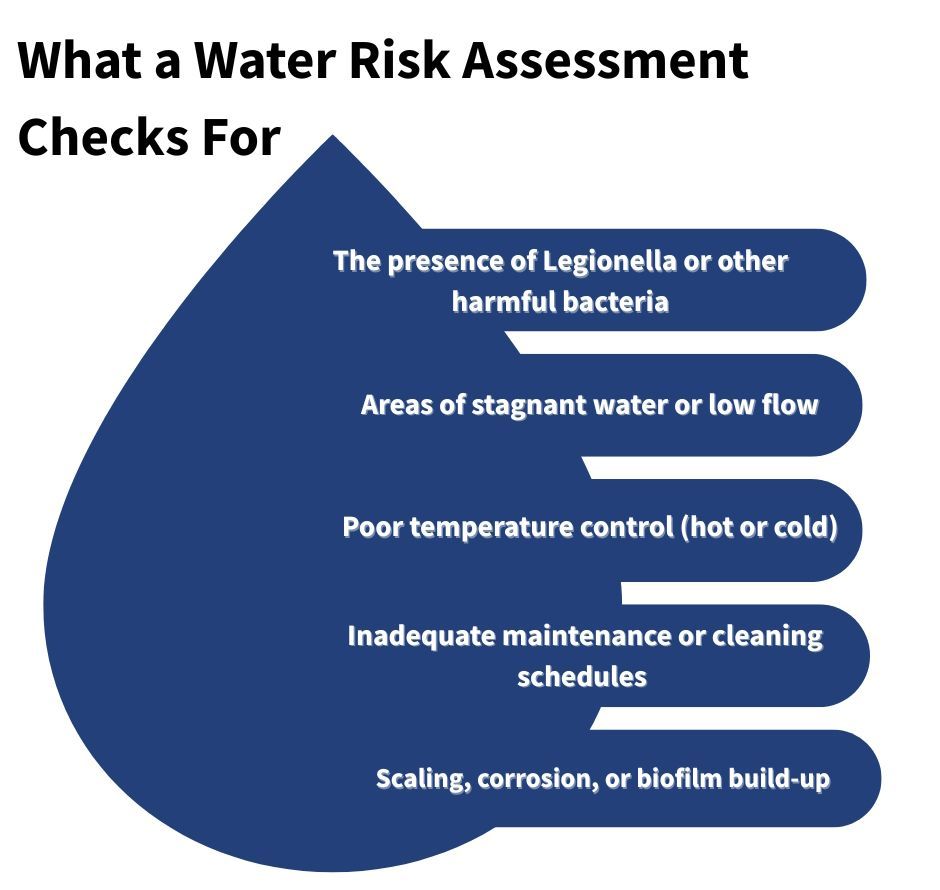
water risk assessment is a detailed inspection and evaluation of these systems. Its purpose is to identify potential hazards.
In a healthcare environment, even minor lapses in water hygiene can have severe consequences. Vulnerable patients - including the elderly, newborns, and those with weakened immune systems - are particularly at risk of contracting Legionnaires’ disease, a potentially fatal form of pneumonia caused by Legionella pneumophila.
By conducting regular water risk assessments, healthcare facilities can proactively identify and eliminate hazards before they escalate, ensuring that water systems remain safe, clean, and fully compliant.
The Risk of Legionella in Healthcare Facilities
Legionella bacteria occur naturally in freshwater environments but can become a health risk when they multiply in man-made systems, such as:
- Hot and cold water systems
- Cooling towers and evaporative condensers
- Medical equipment that uses water (e.g., respiratory devices)
- Showers, taps, and spa pools
Healthcare facilities are particularly susceptible due to the scale and complexity of their water systems, which often include long pipe runs, multiple storage tanks, and variable usage patterns. These factors can create ideal conditions for Legionella growth.
When contaminated water is released as fine droplets (aerosols) - for example, during showering or handwashing - it can be inhaled, spreading the bacteria to patients and staff. The consequences can be devastating, making
Legionella risk assessments an essential part of every healthcare facility’s infection control strategy.
What a Water Risk Assessment Involves
At Caledonian Heating & Plumbing Ltd, our water and Legionella risk assessments are carried out by qualified specialists with in-depth knowledge of water hygiene and regulatory compliance.
A typical assessment will include the following key steps:
1. System Survey and Inspection
Our experts begin by inspecting your entire water system, including pipework, tanks, and outlets. This physical inspection allows us to identify areas of concern, such as dead legs (unused pipework), poor insulation, or insufficient water circulation.
2. Temperature Profiling
Water temperature is a critical factor in preventing bacterial growth. Legionella bacteria thrive between 20°C and 45°C, so we test both hot and cold outlets to ensure temperatures are within safe ranges:
- Cold water should be below 20°C
- Hot water should reach at least 50°C (55°C in healthcare environments)
3. Sampling and Testing
If necessary, we take water samples for laboratory testing to identify the presence and concentration of Legionella bacteria or other contaminants.
4. System Mapping and Risk Identification
We produce a comprehensive schematic diagram of your system, highlighting potential risks such as stagnant areas, biofilm build-up, or non-compliant components.
5. Compliance Review
Our team ensures your facility meets all relevant regulations, including:
- The Health and Safety at Work Act 1974
- COSHH (Control of Substances Hazardous to Health) Regulations 2002
- HSE Approved Code of Practice L8 and HSG274 guidelines
6. Detailed Reporting and Recommendations
Following the assessment, you’ll receive a clear and actionable report outlining identified risks and recommended control measures. These may include cleaning, chlorination, temperature adjustments, or ongoing monitoring programmes.
When Are Water Risk Assessments Required?
Healthcare providers have a legal duty to manage and control the risk of Legionella under HSE’s ACOP L8. A formal Legionella risk assessment must be carried out:
When a new healthcare facility opens or undergoes major plumbing work- When there are significant changes to the water system
- Following a positive Legionella test result
- After any reported Legionnaires’ disease case within the facility
- Periodically, to ensure ongoing compliance (typically every two years, or sooner if conditions change)
Regular reassessment ensures that control measures remain effective and that no new risks have emerged over time.
The Legal and Reputational Consequences of Non-Compliance
Failing to carry out proper water risk assessments can result in serious consequences for healthcare organisations. Aside from the obvious health risks, non-compliance with HSE regulations can lead to a range of legal and reputational repercussions.
Healthcare providers that do not meet their obligations may face legal action and enforcement notices from regulatory authorities. In more severe cases, this can escalate to substantial fines or even prosecution, depending on the extent of the breach. Facilities found to pose a significant health risk may also be forced to close temporarily until remedial action is taken, disrupting essential healthcare services.
Beyond the financial and operational consequences, the reputational damage caused by a
Legionella outbreak or compliance failure can be devastating. Trust is a cornerstone of the healthcare sector, and once lost, it can be incredibly difficult to rebuild.
By implementing a robust water management plan supported by regular risk assessments, healthcare providers can safeguard their reputation, ensure compliance, and fulfil their duty of care to patients and staff.
The Role of Ongoing Water Management
A one-off risk assessment is not enough to maintain compliance or safety. Healthcare environments require continuous monitoring and maintenance to keep water systems safe and efficient.
At Caledonian Heating & Plumbing Ltd, we offer ongoing water risk assessment and management services designed to deliver complete peace of mind. Our team closely monitors system temperatures and overall performance to identify potential issues early. We also carry out regular
cleaning and water tank chlorination to prevent the build-up of harmful bacteria.
In addition, we conduct routine testing for Legionella and other contaminants, ensuring that any risks are swiftly identified and addressed. Where necessary, our specialists perform remedial work to resolve potential hazards and maintain system integrity. All activities are thoroughly documented, providing you with the full records required for compliance audits.
This proactive approach ensures that healthcare facilities remain fully compliant and operational, reducing the likelihood of costly disruptions or health incidents.
Why Choose Caledonian Heating & Plumbing Ltd?
With decades of experience serving clients across Edinburgh, Dundee, and throughout Scotland, Caledonian Heating & Plumbing Ltd is trusted by healthcare providers to deliver safe, reliable, and compliant water management solutions.
We pride ourselves on:
- Expert knowledge: Our qualified engineers are specialists in water hygiene, Legionella control, and compliance management.
- Tailored solutions: Every healthcare facility is unique. We adapt our assessments and management plans to meet your specific needs and risks.
- Comprehensive services: From initial testing to full water system remediation, we offer complete water treatment and risk management solutions under one roof.
- Transparent reporting: Our reports are clear, detailed, and compliant with all relevant HSE standards, giving you full confidence in your water safety measures.
Whether you operate a private clinic, hospital, dental practice, or care home, we ensure your water systems are safe, compliant, and fully protected against Legionella and other risks.
Protecting Health, Safety, and Peace of Mind
Water risk assessments are more than just a compliance exercise - they are a vital part of protecting patient safety and maintaining public confidence in healthcare settings. Regular assessments and effective management can help prevent Legionella outbreaks, ensure regulatory compliance, and safeguard your organisation’s reputation.
Contact Caledonian Heating & Plumbing Ltd Today
If your healthcare facility needs a water risk assessment or Legionella testing, don’t wait until an issue arises. Take a proactive approach with expert support from Caledonian Heating & Plumbing Ltd.
We provide professional water treatment risk assessments and ongoing management solutions tailored to the healthcare sector.
Get in touch to learn more about how we can help you maintain a safe, compliant, and efficient water system.